






–– Ntumba Katabua
The audio version of this article is available here: YouTube, Apple Podcasts, or Spotify.
The curtain has closed. The medals have been handed out, and the coveted World Cup trophy has been kissed and hoisted among confetti and fanfare. The 2026 edition of the FIFA World Cup will be remembered for many things – the swansong of major characters like Messi and Ronaldo, controversial refereeing decisions, exploits of minnows Cape Verde, and, of course, Congolese drip.
Religion has its own way of surfacing at such big events. We saw various rituals (players and fans crossing themselves), we heard mythic lore (Peter Drury’s tribute to Messi as the greatest magician and conjurer), displays of religious jewellery and tattoos, acts of prayers after goals, prayer huddles after the match, as well as the presence of witch-doctors to cast spells on opposition sides, etc.
It is the last point here that is of interest to us today – witchcraft and divination in sports.
What does the biblical worldview say, and how should we respond?
Prevalence of divination, magic and sorcery
When athletes’ seasons or personal worth are on the line in a contest, they often rely on everything possible – psychology, physical enhancements, chemical enhancements and even their most cherished beliefs. It is common knowledge that some teams consult skilled spiritual advisers adept at providing them with spiritual powers responsible for their success.
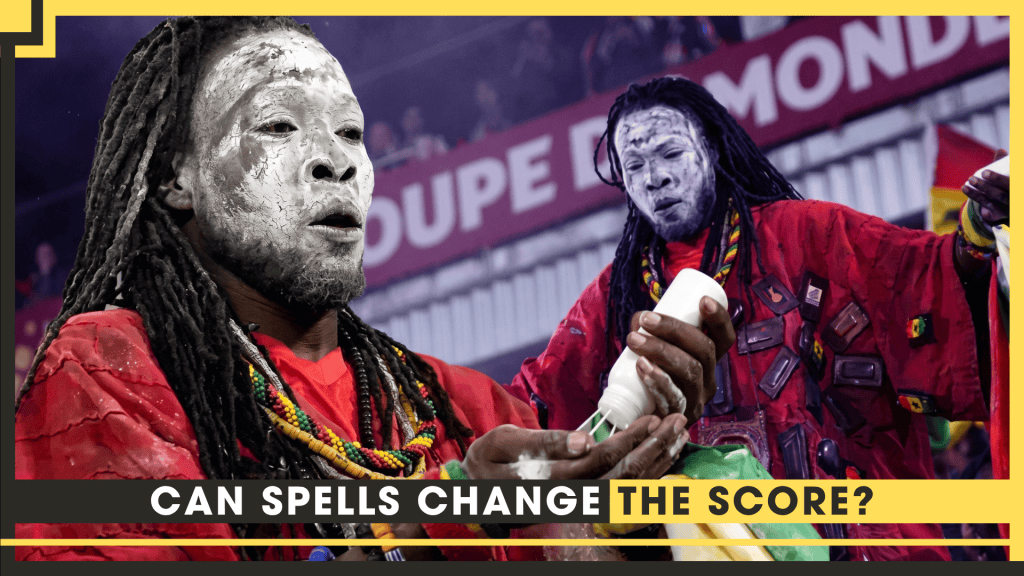
For example, Ghanaian Shaman Kailani Kpa was seen repeatedly blowing white powder into the air during the England-Ghana game. Another spiritualist, Nana Kwaku Bonsam, went viral before the game claiming to have placed a curse on England talisman Harry Kane. Lo and behold, the match finished 0-0. After the goalless Ghana match, Kane did go on to score against Panama once Bonsam said he had “released” the Englishman (source). But Bonsam erroneously predicted that minnows Cabo Verde would eliminate defending champions Argentina. Suffice to say that his vision of what is to come is not always acquainted with what actually comes to pass.
And other teams have relied on omens, amulets and other rituals.
Biblical worldview
But how does the Christian worldview help us understand the realm of divination and sorcery?
Magic and sorcery attempt to influence people and events by supernatural or occult means, though divination by itself is the attempt to use these means to discover events without influencing them.
These are all acknowledged in Scripture, but always in a negative sense (1 Sam. 15:23, 2 Chronicles 33:6, Gal. 5:20). Leviticus 19:26 and Deut. 18:9-12 condemn all sorts of magical practices and witchcraft, including divination and sorcery. Occultism is never acceptable in the sight of God (Isaiah 8:19). This is true in all of life, including in sports.
But what about Joseph (Gen. 44:15) and Daniel (Dan. 2)? Did they practice divination to gain advantage over others?
No. In Joseph’s case, he already knew what his brothers had done (Gen. 42:8). He used dramatic language in Gen. 44:15 in order to heighten the gravity of the charge and force a crisis of integrity. It was not an endorsement of the use of the occult. Joseph explicitly attributed his knowledge to God, not to occult art (Gen. 41:16).
In the case of Daniel and his interpretation of dreams, likewise his gift is attributed to the Holy Spirit (Dan. 2:19-23) and not to the occult.
What about luck and the casting of lots?
Scripture does occasionally use language that could sound like “luck,” but even in those instances, the controlling hand of God is invoked. Whether the issue is national (e.g land allocation in Joshua 18:10) or individual (the exposure of Jonah in 1:7 or the replacement of Judas in Acts 1:26), the consistent thread through these accounts is the belief that God directs the outcome of every cast lot. Proverbs 16:33 states, “The lot is cast into the lap, but its every decision is from the LORD.” Despite the appearance of randomness, the outcome was understood as directed by God.
Important to note that the casting of lots was done prior to the outpouring of the Holy Spirit at Pentecost (Acts 2), after which we see believers relying on direct guidance through the Spirit rather than lots.
“The secret things belong to the Lord our God, but the things that are revealed belong to us and to our children forever, that we may do all the words of this law” – Deut. 29:29. Our role is to do what we know is true (i.e. obey) and not to seek God’s hidden will.
Trust, prayer and effort
When some teams deploy their shamans to enhance results, how should Christian athletes respond?
Philippians 4:6-7 encourages believers to present all requests to God: “Be anxious for nothing, but in everything, by prayer and petition with thanksgiving, present your requests to God…”
First Thessalonians 5:17 calls us to pray without ceasing. That means praying on all occasions, and commending everything to the Lord. And sports isn’t excluded. We pray for the glory of God even through the result of the game.
Further, Psalm 127:1 says: “Unless the LORD builds the house, the builders labour in vain.” This perspective blends the knowledge of God’s sovereignty with human cooperation. We must deploy our God-given talents and exert ourselves, and trust Him for the result, to His glory. God is sovereign over all.
And we pray that those who practice such things will instead abandon their false religions and find the true God who is revealed to us in Jesus Christ.
Trust in God, prayer, and effort. Not anxiety nor revenge curses.