





–– Lennox Kalifungwa
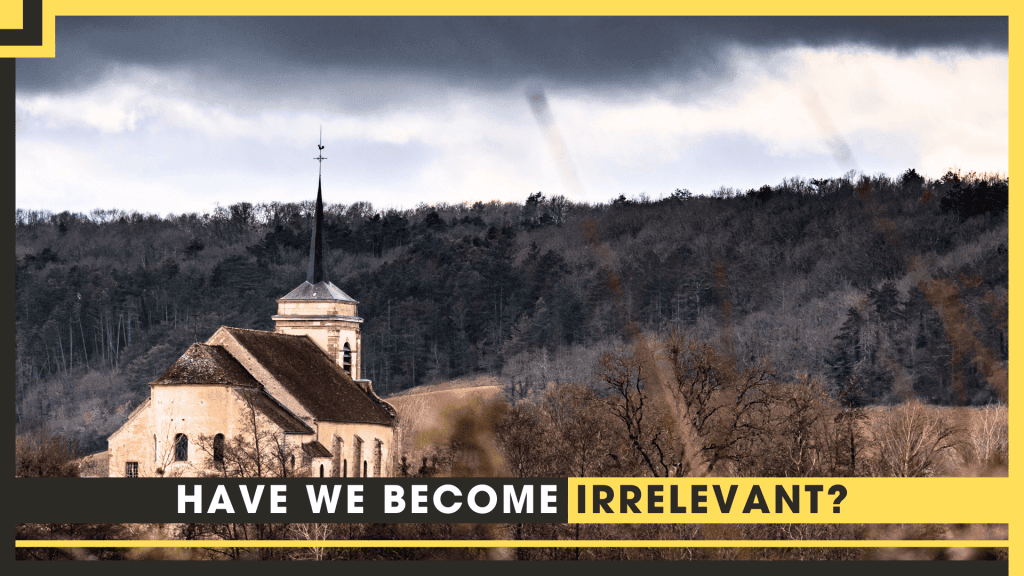
The audio version of this article is available here: YouTube, Apple Podcasts, or Spotify.
The Chaos is the Mission Field
In the wake of unravelling chaos—ethnic hatred, the murder of the unborn (and farmers), theft, overdependence on foreign aid, envy and entitlement, high costs of living, corruption, and failed leadership—one force alone can turn the tide: the church’s repentance.
The New Testament does not describe the church as fragile but as powerful. It is the salt of the earth (Matt. 5:13), the light of the world (Matt. 5:14), the bride of Christ (Eph. 5:25–27), the ambassadors of Christ (2 Cor. 5:20), the sons of God (Eph. 1:5), and the heirs of the kingdom (Eph. 3:6). These are not mere embellishments but declarations rooted in Christ’s triumphant work. The church is not meant to scrape and plead for influence—it is assured in faithfulness to Christ, not as a reward for ambition but as the inevitable fruit of our calling.
The power is on our side. To us belongs truth, wisdom, freedom, and fruitfulness. If the world plunges into ruin, might it not be our own unbelief that enables it? Perhaps it is our fear—of ridicule, suffering, loss, and forfeited reputation—that allows chaos to reign unchecked.
Christianity has built the greatest civilizations. Because of it, hospitals and schools have risen, slavery has been abolished, free markets have flourished, and systems of law and justice have been established. Science has advanced from a worldview that esteemed truth and coherence. Christianity has been the wellspring of sanity, relief, and prosperity in a self-destructive world.
Shouldn’t this present chaos be seen as an opportunity—an urgent summons—for Christians to proclaim Christ’s Lordship and make known His Gospel, the only source of true freedom? Our strength is not found in numbers but in faithfulness. A faithful remnant is more formidable than a vast horde of unbelievers.
Nothing delights the enemies of God more than the church’s retreat. Our whining emboldens them. Our obsession with mere survival is their triumph. Our cowardly impulse to escape the fight is precisely what devils would prescribe. Yet Christians often fail to see that the surrounding chaos is no accident—it is our mission field.
The Crisis of Unholy Resemblance
When Christians and non-Christians are indistinguishable—when the church’s voice is muted, hesitant, or absent—it is because the church bows to the same idols as the world. A people inevitably resemble what they worship. Where no clear distinction exists between the church and the world, there is a crisis.
Some recoil at the suggestion that they share common ground with the sexually immoral, the murderous, or the corrupt. Yet they seldom pause to consider what distinguishes them from those devoutly enmeshed in religious cults. What sets Christians apart from zealous Jehovah’s Witnesses, Mormons, or Mohammedans? Among these, one finds moral discipline, social respectability, and even a rejection of public vice. What, then, makes the Christian truly distinct?
A holy people cannot help but stand out—not merely for what they abstain from, but for what they pursue, defend, and build. Holiness is not passive resistance but active fruitfulness. A people set apart by God are known not simply by their confessions but by their cultivation of civility—their ability to be fruitful and multiply (Matt. 7:16–20).
If you would discern whether an idea or practice is true, ask whether it leads to freedom and fruitfulness. Truth always produces both. And that freedom and fruitfulness exist not for self-indulgence, but for the glory of God and the good of our fellow man.
The Church’s Abdication
Good theology is the bedrock of a holy people. And yet, perhaps our doctrine is not as sound as we assume. Perhaps our very pride blinds us to our complicity in the decay around us. We shrink the Gospel into a private sentiment, sever religion from its rightful dominion, and in so doing, nurture apathy, silence, and cowardice. These may be dark days indeed—when the church’s own doctrines threaten to undo it, and by extension, the very society it was meant to build and sustain.
Where was the church when corruption tightened its grip on entire nations? Where was the church when the tyranny of governments spread across Africa? Where was the church when immorality seized the culture, parading vice as virtue? Where was the church when tyrants threatened those who refused to bow to lies—the COVID edicts of the World Health Organization among them? Where was the church when racism was repackaged as virtue and restitution, weaponised through decolonisation campaigns that demonise ‘white’ ethnicities? Where was the church as economies collapsed under reckless policies? Where was the church when superstitious practices confined many to the slavery of fearmongers—even within its own walls?
This chaos has taken root on our watch, and we must reckon with this sobering truth: Through ignorance, shallow worldviews, cowardice, apathy, and silence, we have, in effect, handed the culture over to the very forces we were meant to resist.
The state of society is the résumé of the church. What does our culture say about us?
Repentance and Reformation
And yet—Christ is actively building, strengthening, and equipping the church. Nothing in this present moment is more urgent than the church repenting of its sin, recovering its boldness, and reclaiming its mandate to reform. A theology that does not bring reformation to society is not Reformed—it is neutered.
We have been given the capacity—and the duty—to reform politics, economics, academia, family, and every corner of creation over which Christ reigns. As the failures of modern society become undeniable and disillusioned multitudes ask, “What now?” we hold the answer. We alone possess the blueprint for true freedom and human flourishing.
But to wield it rightly, we must first embrace the humility that makes us fit for the task—the humility to know the truth, proclaim it, suffer and die for it, and live by it. Let us commit ourselves, then, to fruitfulness in all that we do, for the nations are in desperate need of what only Christ’s church can provide.